Relocation, Life Choices, and Reflection — Part 8
This series explores the difference between changing your environment and changing your life.
I Never Really Loved Saving Money
Ever since university, I loved going abroad.
I loved listening to foreign languages and watching people — noticing how they reacted in ordinary moments, the small things that revealed something true about human nature.
In Japan, life is so polished, so carefully arranged, that certain things become invisible. Abroad, they were exposed. Places where infrastructure barely held together. Places of breathtaking, almost shocking natural beauty. Places where values and common sense were completely different from my own.
Every time I visited somewhere like that, I felt a little freer.
Surrounded by people, yet unseen by anyone. It was, I think, the feeling of stepping briefly outside of what I can only call the atmosphere of Japan.
But in my twenties and early thirties, I was also deeply shaped by the atmosphere around me.
In Hawaii or Guam, I’d buy designer goods. I wore fashionable clothes. I worked hard to look like I belonged on the right side of things — the side that had it together.
Looking back, I don’t think I genuinely wanted those things. I think I was afraid of being looked down on.
I was performing the role of a proper adult woman, doing it desperately, by the unspoken rules of the world around me.
“No One Was Going to Save Me”
In my twenties, I ended a relationship with someone I’d been with since university — years of my life.
I had assumed we would marry. That was simply the story I was living.
But the conversation never came. And strangely, even though being with him felt safe, something about it also felt suffocating. There were moments that felt like being directed. Controlled, even slightly.
At the time, I believed — without question, the way you believe things you’ve absorbed from the air — that marriage and children were the natural destination for a woman’s happiness.
Friends were marrying one after another. I attended wedding after wedding, reception after reception.
Some of those couples are still close and happy today. Others drifted. One friend divorced and remarried. Another stays in a marriage she can’t leave because of the children, and she looks like she’s quietly drowning.
Marriage carries real practical benefits — legal protections, financial structures, social stability. But those things don’t guarantee a life. I was beginning to understand that.
And then, most recently, there were seven years with someone else.
When I reached the turning point of leaving my job — one of the biggest decisions of my life — he was already gone.
It strikes me as almost uncanny: at every major crossroads, the person I most needed beside me has not been there.
That pattern has repeated itself more times than I can count.
The Fear of Aging as a Woman
I had a relationship in my early thirties too.
But that one collapsed under the weight of everything I was carrying for both of us. When I finally reached the point of I can’t do this anymore, the relationship itself crumbled.
By my late thirties, a different kind of anxiety had set in: the awareness that time for having children was running out.
I paid for matchmaking services. Met people in the lounges of luxury hotels, in cafés in fashionable neighborhoods. A long parade of introductions.
But I never found someone where I could picture a shared future. A life that felt real.
What kind of life had I actually wanted?
Honestly, I’m not sure I ever knew.
Love and Money Were Never Really Separate
Who you love, who you build a life with — it isn’t decided by feeling alone.
In reality, money, lifestyle, and how you work are all tangled up together. I could see it clearly when I looked at my friends.
One friend’s husband became a successful entrepreneur. She wore elegant clothes, carried beautiful bags. Another friend’s husband was self-employed — freedom on one side, but she was a civil servant holding everything together, raising children almost entirely alone. Families where both worked in stable public sector jobs tended toward quiet, modest lives.
Money is inseparable from the shape a life takes. I’ve come to accept that.
Seven years ago, I think I would have been drawn primarily to financial stability in a partner. But even then, that wasn’t the whole picture.
Sensitivity. The ability to laugh at nothing in particular. A sense of calm ease between two people. The feeling that neither of you is standing still — that you’re both, somehow, still growing.
These things mattered to me just as much. But finding all of it in one person turned out to be very hard.
Attraction, comfort, presence — yes, those matter. But living an actual life in the real world takes more than feeling.
Money Was a Seawall Against Losing My Freedom
Living alone, and finding again and again that the people I needed most were not there when it counted — something gradually became clear to me.
In the end, the only things I could truly rely on were myself, and the money I had earned myself.
Today, many women work on fixed-term or temporary contracts. Companies no longer promise lifelong employment. We’re told constantly to be productive, and now AI is being used as a reason to cut the very jobs people depend on.
In a world like that, what I wanted was the freedom to choose.
To stay at a company, or leave. To depend on no one but myself for that decision.
If I have this amount saved, I can walk away without being afraid.
That was the threshold I was working toward. Not for luxury. For freedom.
The Night I Quit, I Couldn’t Sleep
For nearly twenty years, I was employed somewhere.
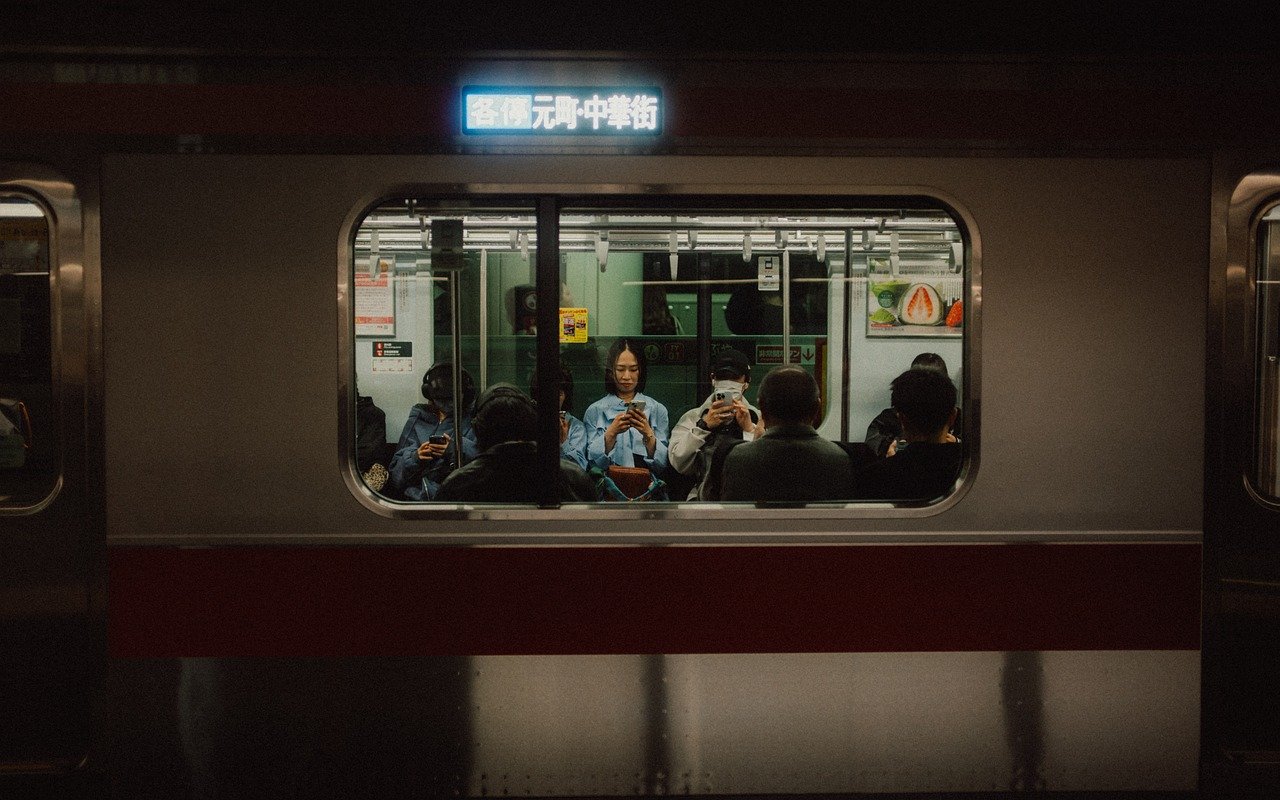
Packed commuter trains. Fixed schedules. Heading to the office on rainy days, snowy days, days when the trains were barely running. Asking myself, more than once: does this way of living mean anything?
The truth is, it always felt a little like wearing clothes that didn’t quite fit.
And yet — when the moment came to leave, I was afraid.
Looking back, I think we spend our entire lives belonging to something. Nursery school, then school, then a company, an organization. The sense of membership is so deep that most of us don’t even notice it until it’s gone.
Belonging somewhere had been making me feel safe. And now, I was choosing to step outside of that.
That scared me a little.
And Yet — I Am Choosing to Live on My Own Terms
What I kept coming back to, through all of it, was this: in the end, you can only rely on yourself.
People have helped me, yes. I’m not denying that.
But at every real turning point, the final decision was mine. The standing back up was mine.
And in that process, I learned things too.
How to build skills. How to accumulate experience. How to slowly grow into the places where I was lacking.
The knowledge in my mind, the things I’ve lived through, the instincts I’ve built up, the stubborn will to keep going — no one can take those from me.
Life doesn’t hand you what you want when you want it. Often, you only understand what something meant long after it’s over.
Looking at the people around me, everyone appears fine on the surface, and everyone is quietly carrying something heavy.
Happiness doesn’t have one shape.
Being married. Having children. Working at a stable company. These are not the only measures of a life well-lived. There is so much more that can’t be reduced to a checklist.
So today, I believe that leaving the company — this choice I’m making — might lead me toward something a little freer. A little more like myself.
I’m afraid. Of course I am.
But I want to try living the life I chose.
This essay is also available in Japanese and Spanish.
日本語版はこちら

Versión en Español
If this essay resonated with you,
you can support my writing here ☕
▶ Read the complete collection of essays in English

▶ Leer la colección completa de ensayos en español
コメント