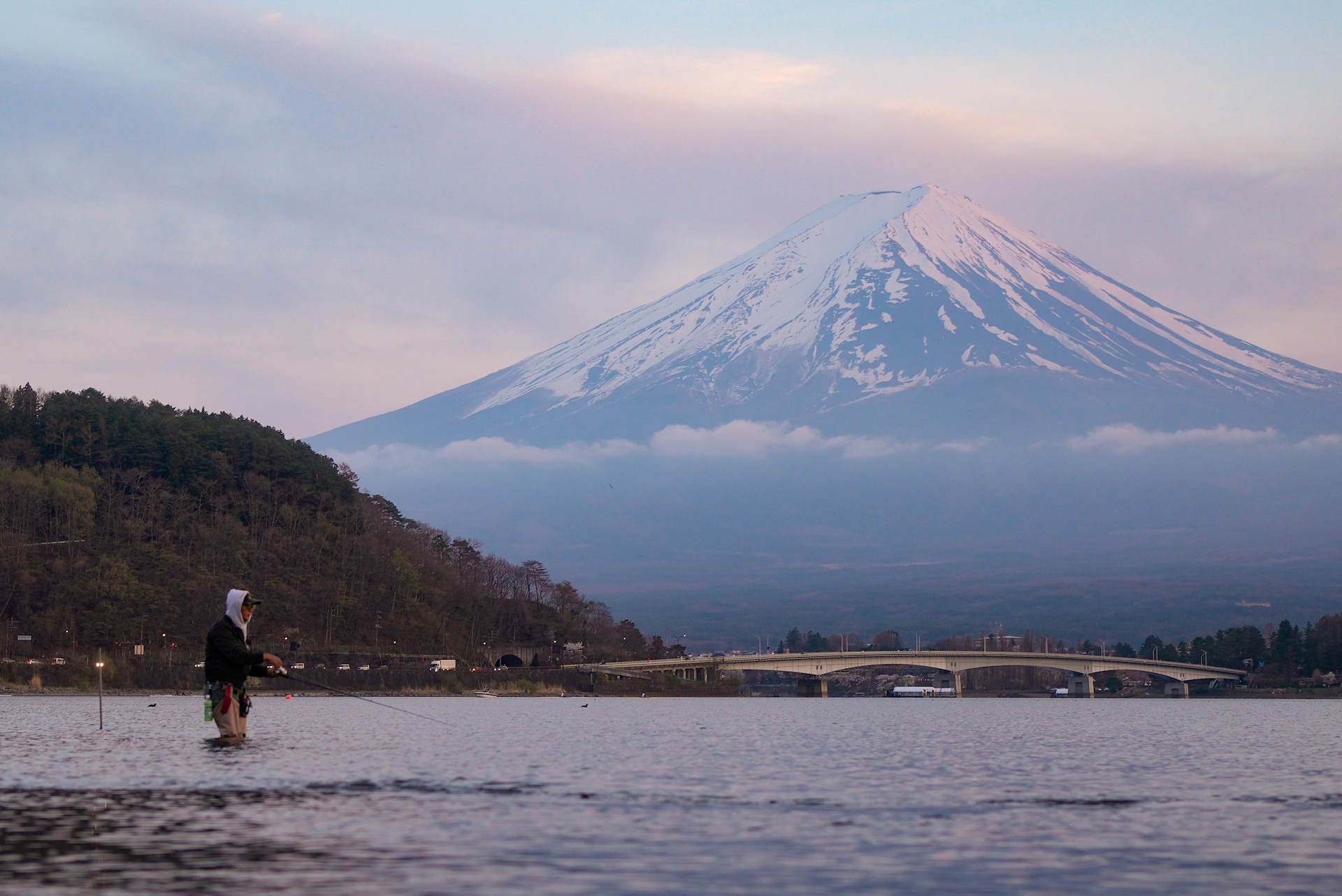
- Relocation, Life Choices, and Reflection — Part 7
- “I Want to Live in Japan” — But What Does That Really Mean?
- Two Different Ways of Seeing Japan
- Japan Really Is an Unusual Country
- Admiring Japan Is Not the Same as Living There
- The Hidden Cost of Order
- Why Returnees Often See Japan Differently
- Japan as a Place to Start Over
- Life Is Not Constant Transformation
- Relocation Is Never Just About Location
Relocation, Life Choices, and Reflection — Part 7
This series explores the difference between changing your environment and changing your life.
“I Want to Live in Japan” — But What Does That Really Mean?
Over the years, I’ve noticed something interesting:
foreigners who dream of living in Japan and Japanese people who have spent time abroad often talk about the same country in completely different ways.
Both are looking at Japan from a kind of distance.
But the emotional meaning of that distance is not the same.
For some people, Japan represents calm, safety, anonymity, and relief from social exhaustion.
For others — especially those who grew up there — Japan can also represent pressure, conformity, and the quiet weight of unspoken expectations.
Having lived both inside and outside Japan, I’ve found myself thinking more and more about the gap between the Japan people imagine and the Japan people actually live in.
This essay is part of an ongoing series about relocation, identity, and the complicated hope that changing places might also change us.
Two Different Ways of Seeing Japan
There’s an interesting tension between two kinds of people:
foreigners who feel deeply drawn to Japan, and Japanese people who have lived abroad and returned with a different perspective.
At first glance, both seem to be seeing Japan “from the outside.”
But in reality, the angle — and the emotional depth — of that view can be very different.
Japan Really Is an Unusual Country
When you spend your whole life in one country, its peculiarities become invisible.
Once you leave, they suddenly become impossible to ignore.
Japan has many things that are genuinely rare on a global scale:
- Train carriages that are almost eerily quiet
- Public spaces where order exists without visible enforcement
- Clean streets despite very few public trash cans
- A remarkably consistent standard of service almost everywhere
- Women walking alone late at night with relatively little fear
- Convenience stores, cafés, and restaurants open late into the night — welcoming even to someone alone
I spent part of my life in South America, and the contrast with Japan appeared everywhere in daily life:
in how people occupied physical space, in their relationship with time, in the volume of conversation, in how queues formed (or didn’t), in what “service” meant, and in how safety was either felt or absent.
Neither is inherently better or worse.
They simply operate on very different social assumptions.
So it makes complete sense that many people around the world feel strongly drawn to Japan.
Admiring Japan Is Not the Same as Living There
That distinction matters more than people sometimes realize.
For visitors — or even people who stay for a year or two — Japan’s most comfortable qualities often dominate the experience.
It feels:
- Quiet
- Safe
- Clean
- Considerate
- Convenient
And perhaps most importantly:
people leave you alone.
For someone coming from a culture of constant social pressure, noise, or emotional exhaustion, Japan’s distance can feel almost therapeutic.
Nobody interferes with me.
I can simply exist quietly.
That alone can make life feel lighter.
But the longer you stay, the more the other side comes into focus.
The Hidden Cost of Order
Japan’s calm and order do not exist in isolation.
They are the visible surface of something more complicated underneath:
- The pressure to “read the room”
- The expectation of conformity
- Unspoken social rules governing nearly everything
- A constant low-level tension around not inconveniencing others
What feels peaceful to a visitor can eventually feel suffocating to a resident.
Take Japan’s extraordinary 24-hour infrastructure.
The convenience stores never seem to close.
The trains run with astonishing reliability.
Services continue late into the night.
It’s genuinely reassuring.
But it also rests on long working hours and a social contract built on the assumption that the machine never stops.
And outside major cities, the image of Japan as anonymous and liberating is often inaccurate.
Rural and small-town Japan can be intensely communal:
close neighborhood ties, informal surveillance, gossip, and strong pressure to conform.
The “quiet freedom” many outsiders imagine and the Japan people actually live inside are not always the same thing.
Why Returnees Often See Japan Differently
Living abroad changed how I see my own country in ways I’m still processing.
Japan’s safety and social order are real.
Its convenience is remarkable.
I don’t take those things lightly.
But I also became more aware of:
- The culture of overwork
- The normalization of low wages
- Communication styles that can become emotionally exhausting
- The pressure to belong, fit in, and avoid standing out
Japan’s comfort and safety are impressive by global standards.
But they are sustained by systems that extract very real costs from the people living inside them.
Because of that, I can no longer think in simple terms like “Japan is the best.”
It feels more complicated than that.
Once you’ve lived somewhere else, you start to notice both the comfort and the cost of every society.
You also begin to recognize that other places have their own forms of beauty.
Eventually, the question stops being:
“Which country is better?”
And becomes:
“Which kind of life fits me best?”
Japan as a Place to Start Over
Some people who are drawn to Japan are not only drawn to a country.
They are drawn to the idea of beginning again.
A place where:
- Nobody knows who you are
- You can become someone different
- Your past no longer defines you
I understand that feeling, at least partially.
Sometimes changing your surroundings feels inseparable from changing yourself.
But the longer you live anywhere, the clearer something becomes:
the work, the money, the relationships, the loneliness, and the unresolved questions about who you are eventually follow you.
The fantasy of “if I can just move somewhere else, I’ll finally be free” rarely lasts forever.
Life has a way of catching up.
Life Is Not Constant Transformation
One thing I’ve realized since living abroad is that certain years leave behind an outsized sense of movement — a feeling that life itself was unfolding intensely.
My time in South America felt like that.
And I don’t regret it.
But looking back, I no longer think life is meant to be constant growth or endless transformation.
There are quiet stretches.
Repetitive periods.
Ordinary days where very little changes.
And then, occasionally, a few years arrive that rearrange everything.
Maybe those transformative periods are meaningful precisely because ordinary life exists around them.
Maybe the quieter seasons are not failures at all.
Relocation Is Never Just About Location
How you see Japan after living elsewhere.
How you see the foreigner who idealizes it.
These perspectives quietly reveal something about how a person relates to their own life:
what they are running toward, what they may be running from, and what they hope a new place might solve.
Relocation is never just a change of location.
Underneath it, there is almost always a deeper question:
How — and where — do I actually want to live?
日本語版はこちら

Versión en español:
For years, I kept saving money without fully understanding why.
Only now, standing at the edge of leaving corporate life, do I realize it was never really about luxury or success.
It was about freedom.

▶ Read the complete collection of essays in English
If this essay resonated with you,
you can support my writing here ☕
コメント